Research Page

Behavioral Analysis of Human-AI Interaction in AI-Assisted Programming and Data Science Learning

The rapid advancement of artificial intelligence (AI) has positioned data science and programming as essential competencies in higher education.

Author: Yu-Ting Shih 10 pages 3 figures Lag Sequential Analysis Generative AI

Publication Info

Source file: 20250424905.pdf

Keywords

Lag Sequential Analysis, Generative AI, Programming Education

This page is generated from the shared research-page structure and uses the site-wide template.

Overview

The rapid advancement of artificial intelligence (AI) has positioned data science and programming as essential competencies in higher education.

Key Points

  • Background: The rapid advancement of artificial intelligence (AI) has positioned data science and programming as essential competencies in higher education.
  • Method: The study presents a clear research design that can support further work in educational technology and AI-supported learning.
  • Findings: The article highlights the value and applicability of AI-related approaches in educational and learning contexts.
  • Significance: Relevant themes for follow-up discussion include: Lag Sequential Analysis, Generative AI, Programming Education.

Summary

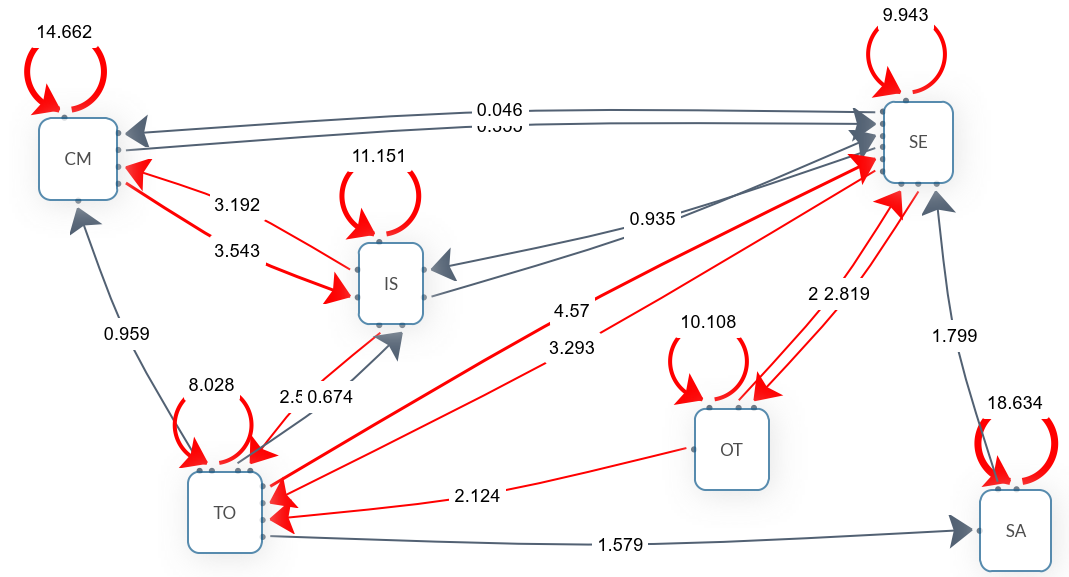
The rapid advancement of artificial intelligence (AI) has positioned data science and programming as essential competencies in higher education. However, students without a computer science background often struggle with the abstract reasoning required for programming. This study explores how 103 undergraduates interacted with an AI-based virtual learning partner during a general education course, analyzing 710 dialogue records through lag sequential analysis. Results identified seven behavior types and revealed that task submission (TS) was the most frequent, reflecting a highly task-oriented learning style. A key finding was the bidirectional transition between information seeking (IS) and cognitive/metacognitive interaction (CM), forming a "learning exploration loop" indicative of reflective and integrative learning strategies. Transitions from IS to task-oriented requests (TO) further showed students applying knowledge to concrete tasks. Social engagement (SE) patterns, including…

Figures

Extracted Figures

Original extracted figures are retained for visual reference and contextual reading.

Behavioral Analysis of Human-AI Interaction in AI-Assisted Programming and Data Science Learning - figure-01.jpg
Behavioral Analysis of Human-AI Interaction in AI-Assisted Programming and Data Science Learning - figure-02.png
Behavioral Analysis of Human-AI Interaction in AI-Assisted Programming and Data Science Learning - figure-03.png